Copyright information
The original version was signed by The Honourable Lena Metlege Diab, ECNS, KC, PC, MP, Minister of Immigration, Refugees and Citizenship
For more information, contact
Immigration and Refugee Board of Canada
Minto Place, Canada Building
344 Slater Street, 12th floor
Ottawa, Ontario
Canada
K1A 0K1
© His Majesty the King in Right of Canada, as represented by the Minister of Immigration, Refugees and Citizenship, 2026.
Government of Canada Catalogue Number: MQ1-8E-PDF
International Standard Serial Number: 2561-0759
On this page
At a glance
This departmental results report details the Immigration and Refugee Board of Canada's (IRB or the Board) actual accomplishments against the plans, priorities and expected results outlined in its
2025 to 2026 Departmental Plan.
These results align with the Board's
vision, mission,
raison d’être and operating context.
Key priorities
The Board identified the following key priorities for 2025 to 2026:
- Scaling capacity: The IRB's priority was to maintain quality while further increasing the Refugee Protection Division's productivity gains in relation to its funded level. Therefore, the IRB pursued efforts to simplify and standardize its processes, including leveraging technology. The Board also reallocated existing resources to priority initiatives that would help transform how work is done.
- Performance management and accountability: Performance management information and tools became increasingly important guides for the IRB's efforts to maintain quality decisions and optimize the use of its resources by maximizing productivity and minimizing cost. The Board incorporated key drivers of cost and productivity into its performance measurement framework.
Ensuring that the Board's three (3) other divisions maintained their capacity to hear and decide as many cases as were referred to them within the applicable time frames was also essential. To support this, operational improvements identified for the Refugee Protection Division were deployed across the organization, where feasible.
Highlights
The Board maintained quality and consistent decision-making while continuing to advance its multi-year strategic plan, which focused on modernizing and simplifying tools and processes. In order to achieve these objectives, the Board focused on important initiatives that benefit members, support staff, and persons appearing before the Board. For example:
-
Members: Established a national triage hub for the Refugee Protection Division, which provides enhanced adjudicative support and a standardized triage procedure; and ensured members had the tools and training they need to provide their reasons for decision in a timely way.
-
Registry and adjudicative support: Advanced a new document generator system that makes it easier to prepare and modify letters and forms; and progressed toward the automated preparation of electronic files, to reduce manual handling and present case material to decision-makers and parties in a consistent, searchable and accessible format.
-
Claimants, appellants and representatives: Simplified how parties interact with the Board by narrowing its focus to a few key communication channels; continued to increase access to and improve the functionality of My Case by enabling the onboarding of refugee claimants, refugee appellants and uncontracted designated representatives; and improved information and accessible tools for counsel and claimants, especially those claimants who are unrepresented.
The Board also undertook preparatory work in anticipation of the passage of the
Strengthening Canada's Immigration System and Borders Act, which received Royal Assent in March 2026 and is expected to have significant implications for IRB processes and tools in the coming year.
- Total actual spending (including internal services): $332,332,205
- Total full-time equivalent staff (including internal services): 2,441
For detailed information on the IRB’s total spending and human resources, read the
Spending and human resources section of this report.
Summary of results
The following provides a summary of the results the IRB achieved in 2025 to 2026 under its “core responsibility” (its main area of activity).
Core responsibility 1: Adjudication of immigration and refugee cases
Actual spending: $253,858,523
Actual human resources: 1,949
The IRB is an independent administrative tribunal established by Parliament on January 1, 1989, to resolve immigration and refugee cases. Decisions on immigration and refugee cases made by the IRB must conform with the
Immigration and Refugee Protection Act (IRPA) and the
Canadian Charter of Rights and Freedoms, and be applied in a manner that complies with the international human rights instruments to which Canada is a signatory and that incorporates the
United Nations Convention Relating to the Status of Refugees.
At the IRB, the
Refugee Protection Division (RPD) hears and decides claims for refugee protection made in Canada, and the
Refugee Appeal Division (RAD) decides appeals from decisions of the RPD to allow or reject claims for refugee protection. The Supreme Court of Canada has held that both the
Canadian Charter of Rights and Freedoms and the
Canadian Bill of Rights apply to the determination of refugee protection claims by the IRB.Footnote 1 The Supreme Court has also held that where a serious issue of credibility is involved, fundamental justice requires that credibility be determined in an oral hearing. The courts have also consistently held that given the nature of the rights being adjudicated, both the RPD and the RAD must afford the parties before them a high degree of procedural fairness.Footnote 2
The
Immigration Division (ID), at the request of the Canada Border Services Agency (CBSA) or Immigration, Refugees and Citizenship Canada, conducts admissibility hearings for foreign nationals or permanent residents believed to be inadmissible to, or removable from Canada under law. The ID also conducts detention reviews for foreign nationals or permanent residents detained by the CBSA to review the reasons for detention. The
Immigration Appeal Division (IAD) hears appeals on several types of immigration-related matters.
Aligned with global trends, Canada saw a slight reduction in intake of refugee protection claims. This trend, along with the Board's focus on scaling operational capacity, resulted in a gradual reduction of the RPD's inventory for the first time since March 2022. There remains a substantial surplus inventory in the RPD, due to several years of sustained and unprecedented intake volumes, above funded capacity. Additionally, the composition of the inventory is becoming more complex. Multiple years of sustained effort will be required to return the inventory to a working level. In 2025 to 2026, intake for the RAD increased 30% year-over-year, as of March 31, 2026. While intake for the ID and the IAD remained generally stable throughout much of the fiscal year, the increasing complexity of Canadian immigration law has significantly heightened the complexity of cases before both divisions. Members are required to navigate evolving legal frameworks, assess increasingly nuanced and often voluminous evidence, and apply sophisticated legal analysis to a broad range of circumstances. As a result, members require additional time to thoroughly evaluate the facts, interpret and apply legal principles, and render well-reasoned, legally sound decisions.
In 2025 to 2026, the Board continued advancing its Horizon 2026-27 strategic plan, which aims to modernize and simplify tools and processes, helping the IRB become more responsive to intake and enhancing operational capacity. The Board also strengthened its performance management and accountability to ensure that it was optimizing the use of its resources.
During the year, the IRB faced financial uncertainty due to the anticipated ending of temporary funding and the Government of Canada Comprehensive Expenditure Review. Although Budget 2025 renewed temporary funding for two years, the timing of this decision limited the Board's ability to maintain its adjudicative capacity and saw departures which resulted in a reduced member complement. The renewed funding also came with a condition to increase asylum decisions, prompting a realignment of resources toward the processing of refugee protection claims.
Despite these challenges, the Board achieved record-high finalizations, with over 107,000 decisions rendered across its four divisions. The IRB accomplished this without compromising on quality and while maintaining its ability to render fair decisions and provide timely access to justice. Though the Board operates within an evolving and unpredictable context, it is positioned to meet the challenges ahead while continuing to deliver on its mandate effectively and efficiently.
For more information on the IRB's activities related to the
adjudication of immigration and refugee cases, read the “Results: What we achieved” section of this report.
From the Chairperson

Manon Brassard
Chairperson and Chief Executive Officer
I am pleased to present the 2025 to 2026 Departmental Results Report for the Immigration and Refugee Board of Canada (IRB or the Board). As Canada's largest administrative tribunal, the IRB makes decisions regarding immigration and refugee matters in Canada fairly, efficiently, and in accordance with Canadian law and international obligations.
In fiscal year 2025 to 2026, the IRB operated in an environment of financial uncertainty associated with the anticipated sunsetting of temporary funding and the Government of Canada Comprehensive Expenditure Review. The Board proactively managed this uncertainty through prudent workforce planning measures such as cost containment and workforce attrition. This was intended to alleviate the need to use workforce adjustment measures. However, in doing so the Board lost 10% of its refugee protection member complement – a significant portion of its capacity. Budget 2025 subsequently provided a two-year renewal of temporary funding. What was expected to be a year focused on downsizing, with staffing adjustments already underway, had to shift in the last half of the fiscal year when the IRB was called upon to return to, and exceed, previous staffing levels. The renewed funding also included expectations to improve the timeliness of refugee decisions, leading the Board to strategically direct additional resources toward refugee claim processing and related priorities. While the IRB is actively rebuilding its workforce, restoring the full member complement will take time. Recruiting, onboarding, and training new members are essential investments to ensure the Board maintains the expertise and capacity to meet its mandate.
The Board continues to play a critical role in Canada's immigration and refugee system, applying its expertise as an administrative tribunal to hear and decide a high volume of cases, while maintaining quality and upholding legal standards. It is more important than ever for the IRB to meet its mandate. Immigration and refugee matters continue to be a significant area of focus both in Canada and around the world, reinforcing the importance of continued adaptability, innovation, and excellence in fulfilling the Board's responsibilities.
Despite the challenges faced in 2025 to 2026, the IRB achieved record-high finalizations, with over 107,000 decisions rendered across its four divisions:
- the Refugee Protection Division (RPD) finalized over 82,600 cases,
- the Refugee Appeal Division (RAD) finalized nearly 11,500 appeals,
- the Immigration Division (ID) finalized nearly 7,300 detention reviews and around 2,200 admissibility hearings, and
- the Immigration Appeal Division (IAD) finalized around 4,000 appeals.
These results underscore the Board's important work in supporting timely access to justice for those appearing before it, while demonstrating what can be accomplished with adequate resources. It also highlights the success of the IRB's ongoing efforts to scale its operational capacity through the modernization and simplification of its tools and processes, thereby improving productivity relative to its funded level, while maintaining quality.
At the same time, in 2025 to 2026 the Board undertook preparatory work in anticipation of the passage of the
Strengthening Canada's Immigration System and Borders Act, which received Royal Assent in March 2026. This legislation is anticipated to have significant implications for IRB processes, requiring new ways of working and changing the nature of the Board's caseload. As the composition of refugee claims evolves, it may affect the number of finalizations that the IRB can achieve this fiscal year.
While significant progress was made this past year, important challenges remain. Intake is rising in the RAD, and a substantial inventory persists in the RPD, due to sustained, unprecedented intake volumes above funded capacity in previous years. Furthermore, Canadian immigration law continues to evolve, leading to increased complexity for both the ID and IAD. As the Board's inventory shifts in composition and complexity, and capacity constraints persist, the IRB may face temporary challenges in sustaining previous levels of case finalizations. Moving forward, the IRB will continue to optimize operations across all divisions while rigorously maintaining quality.
I am proud of what we have achieved through the hard work and dedication of IRB employees. As we look ahead, I remain confident in our ability to build on this strong momentum, seize new opportunities, and address the challenges before us. Together, we will continue to foster a valued workplace and fulfill our essential role within Canada's immigration and refugee system.
Results – what we achieved
Core responsibilities and internal services
Core responsibility 1: Adjudication of immigration and refugee cases
In this section
Description
The IRB renders quality decisions and resolves cases in a timely manner regarding immigration and refugee protection cases. This includes determining refugee protection claims and appeals and applications to vacate or cease refugee protection. It also includes making decisions in admissibility hearings and detention reviews, and on appeals on certain immigration cases (e.g., family sponsorship applications, certain removal orders, applications based on meeting residency obligations and admissibility hearings).
Quality of life impacts
This core responsibility contributes to the “Good Governance” domain of the
Quality of Life Framework for Canada. The domain indicator reflected in the core responsibility description is: Confidence in institutions.
Progress on results
This section details the Board’s performance against its targets for each departmental result under Core responsibility 1: Adjudication of immigration and refugee cases.
Table 1 shows the target, the date to achieve the target and the actual result for each indicator under the adjudication of immigration and refugee cases for the last three fiscal years.
Table 1: Fair and timely adjudication of immigration and refugee cases
| Departmental result indicator | Target | Date to achieve target | Actual result |
|---|
Time within which 80% of refugee protection cases are finalized | At most 24 months | March 2026 | 2023 to 2024: 18 months 2024 to 2025: 20 months 2025 to 2026: 27 months |
Time within which 80% of refugee appeals are finalized | At most 6 months | March 2026 | 2023 to 2024: 4 months 2024 to 2025: 3 months 2025 to 2026: 4 months |
Time within which 80% of admissibility decisions are finalized | At most 9 months | March 2026 | 2023 to 2024: 5 months 2024 to 2025: 5 months 2025 to 2026: 4 months |
Percentage of detention reviews that are concluded within legislated time frames | At least 96% | March 2026 | 2023 to 2024: 98% 2024 to 2025: 98% 2025 to 2026: 98% |
Time within which 80% of final or stay decisions on immigration appeals are issued | At most 12 months | March 2026 | 2023 to 2024: 10 months 2024 to 2025: 9 months 2025 to 2026: 8 months |
% of decisions overturned by the Federal Court | At most 1% | March 2026 | 2023 to 2024: 0.5% 2024 to 2025: 0.7% 2025 to 2026: 0.1% |
The percentage of cases that meet high quality standards | At least 80% | March 2026 | 2023 to 2024: 95% 2024 to 2025: Not availableFootnote 1 2025 to 2026: 93% |
Table 1 shows the target, the date to achieve the target and the actual result for each indicator under “Fair and timely adjudication of immigration and refugee cases” for the last three fiscal years.
The
Results section of the Infographic for the IRB on GC InfoBase provides additional information on results and performance related to its program inventory.
Details on results
The following section describes the results for the adjudication of immigration and refugee cases in 2025 to 2026 compared with the planned results set out in the IRB’s departmental plan for the year.
Fair and timely adjudication of immigration and refugee cases
Results achieved
In 2025 to 2026, the IRB remained focused on maintaining quality decision-making while scaling operational capacity and strengthening performance management and accountability. This allowed it to optimize resources, maintain consistency and improve efficiency. Through its Horizon 2026-27 strategic plan, the Board advanced efforts to simplify and standardize tools and processes, helping it respond more effectively to intake, scheduling, and other key aspects of the Board’s workflow. With these objectives as a central focus, the IRB’s initiatives benefited members, support staff, management, and those appearing before the Board. The primary beneficiary for each initiative is identified below.
Members
- Established a national triage hub for the RPD, to improve coordination between adjudicative and registry functions, and establish a standardized triage procedure. This improves consistency in file preparation and analysis and maximizes scheduling opportunities.
- Developed a workflow tool for members to use in drafting their reasons for decisions in a format that is consistent and in plain language.
- Enhanced training programs for the RPD and the RAD, to ensure members receive the most relevant and practical training possible.
Registry and adjudicative support
- Migrated more than 190 templates from the old case management system to a new document generator system, making it significantly faster to create letters and easier to create, modify and publish changes to forms.
- Advanced the development of an electronic file (e-file) to automate the core steps of preparing an electronic file and present case material in a consistent, searchable and accessible format.
- Standardized various organizational processes, including the RPD Registry intake process, which helped create a consistent case flow across regions and provided a foundation for the standardized scheduling approach completed in 2025 to 2026.
- Mapped current divisional workflows and defined a future vision for case processing to reduce inefficiencies, gaps and bottlenecks, while helping divisions improve consistency and prioritize high-impact improvement opportunities.
- Developed a new scheduling tool, with increased functionality, that will be launched in fiscal year 2026 to 2027 for all divisions.
- Continued to enhance the case management system to reduce repetitive tasks and support more efficient file processing. During the fiscal year, over 300 improvements to the case management system were completed, resulting in approximately 2,850 hours saved annually through automations.
- Consolidated certain regionally delivered Designated Representative (DR) services (such as recruitment, contracting and onboarding) into a national model, to ensure sufficient DR capacity and standardized practices.
- Reviewed and updated training for Early Resolution Officers (EROs) in the IAD to ensure that it meets current operational needs and supports the effective onboarding of new EROs.
Claimants, appellants and representatives
- Simplified how parties interact with the Board by focusing on key communication channels, including reducing seven phone numbers to one national and one international number, and enhancing the website to make it more accessible and easier to use.
- Continued to increase access to and improve the functionality of My Case by enabling the onboarding of RPD claimants, RAD appellants and uncontracted designated representatives.
- Added a video to the current catalogue which explains the IAD process to self-represented appellants. This reduces the time spent by IRB employees explaining generic information and permitting more focus on supporting appellants with information pertinent to their individual file and circumstances.
- Improved information and accessible tools for counsel and claimants, especially unrepresented claimants, to help them navigate the refugee claim process and prepare for their hearing. This included plain-language RPD videos, enhanced public web pages, and a modernized intake form provided by Immigration, Refugees and Citizenship Canada and the Canada Border Services Agency, giving claimants clearer information earlier and helping the Board reduce incomplete and late filings.
Board leadership
- The IRB expanded its focus on performance monitoring and measurement.
- Enhanced tools to understand performance results and productivity factors.
- Supported the advancement of the Board's cost optimization agenda by integrating cost metrics into the IRB's performance and results framework.
- Developed data analysis and monitoring tools to identify, prevent and resolve operational bottlenecks earlier, thus reducing unused capacity and enabling more timely responses when results diverged from plans.
In addition, the IRB undertook preparatory work for the
Strengthening Canada's Immigration System and Borders Act, which received Royal Assent in March 2026 and is expected to significantly affect IRB processes. Resources were redirected from other priorities in order to review the new Act and identify and prepare for changes required to reflect the new legislative framework within the IRB's Rules of Procedure and other IRB processes. This resulted in lost productivity and delays in advancing other key initiatives.
Key risks
In 2025 to 2026, the IRB identified many factors impacting its operating context, several of which were outside its control. Specifically, though intake of refugee claims began to slow during the fiscal year, the in-Canada asylum system continues to face pressure. Increasing and unprecedented asylum intake over multiple years have had an impact across the IRB. For example, the Board started the fiscal year with intake volumes of refugee claims beyond its funded processing capacity. Broader immigration policies intended to alleviate pressure on the immigration and refugee system did not have an immediate impact on the Board's intake and were not intended to address existing surplus inventory levels.
Therefore, at the outset of the fiscal year, the IRB identified a significant risk: that the intake of refugee claims would continue to create surplus inventory levels beyond working inventory. Furthermore, if the IRB had insufficient and/or unpredictable funding, there was a risk that the Board might not be able to optimize operations and sustain productivity, resulting in organizational performance being hampered by an inadequate workforce capacity. This was realized in 2025 to 2026 when an anticipated decrease in funding led to a reduced member complement, which the Board is now trying to rebuild. Productivity is reliant on capacity and integration within the entire immigration and refugee system. However, given the pressure on the IRB's partner organizations and stakeholders, there was a risk that their decisions might have impacts on the IRB's operations and priorities.
The Board mitigated these risks to the extent possible. The work highlighted in the “Results” section outlines the steps taken to scale capacity and maintain quality decision-making. Furthermore, the IRB enhanced its performance monitoring tools, including by implementing a benefits realization framework for key initiatives that helped strengthen oversight and support informed management decision-making, improving resource and cost forecasting. The Board also worked with its partner organizations to prepare for the implementation of the
Strengthening Canada's Immigration System and Borders Act and to ensure collaboration on the implementation of major policy decisions. The Board was also successful in receiving two additional years of temporary funding, although the timing of this funding announcement prevented the IRB from maximizing its capacity in fiscal year 2025 to 2026, and will continue to impact future years as the Board works to restore its full member complement, investing in recruitment, onboarding, and training new members.
As the IRB continues to invest in digital tools, it identified a risk related to evolving and increasingly sophisticated cybersecurity threats that could impact its ability to safeguard its operational systems and information, despite existing prevention, detection and response measures. Significant reputational, operational and legal consequences could arise if the IRB does not safeguard its information from unauthorized access, modification or loss. To mitigate this, the IRB conducted testing and threat risk assessments for key tools and systems, in collaboration with Government of Canada lead security agencies. In a context of rapidly evolving technology, the IRB recognizes both the opportunities and risks associated with the use of Artificial Intelligence and has established a policy framework to support its responsible use. The Board will continue to develop and implement policies, controls and monitoring systems to ensure that Artificial Intelligence technologies are used responsibly and deliver reliable, consistent results without harming the Board or external stakeholders.
Resources required to achieve results
Table 2 provides a summary of the planned and actual spending and full-time equivalents required to achieve results.
Table 2: Snapshot of resources required for Adjudication of immigration and refugee cases
| Resource | Planned | Actual |
|---|
Spending | $270,950,367 | $253,858,523 |
Full-time equivalents | 1,976 | 1,949 |
The
Finances section of the Infographic for the IRB on GC Infobase page and the
People section of the Infographic for the IRB on GC InfoBase page provide complete financial and human resources information related to its program inventory.
Related government priorities
This section highlights government priorities that are being addressed through this core responsibility.
Gender-based Analysis Plus
The Board is an independent administrative tribunal responsible for making well‑reasoned decisions on immigration and refugee matters efficiently, fairly and in accordance with the law, on a case-by-case basis.
The IRB applies a GBA Plus lens to its decisions, as per the
Chairperson's Guideline 4: Gender Considerations in Proceedings Before the Immigration and Refugee Board, the
Chairperson's Guideline 8: Accessibility to IRB Proceedings — Procedural Accommodations and Substantive Considerations, and the Chairperson's
Guideline 9: Proceedings Before the IRB Involving Sexual Orientation, Gender Identity and Expression, and Sex Characteristics.
Notably, the Gender Related Task Force in the RPD is a dedicated team with specialized training to hear and decide gender-related refugee protection claims. It ensures the respectful, trauma-informed and consistent adjudication of such claims. It also identifies, implements and refines best practices for adjudicating gender-related claims and shares those best practices for adjudication broadly across the RPD.
United Nations 2030 Agenda for Sustainable Development and the UN Sustainable Development Goals
Information on the IRB's contributions to Canada's Federal Implementation Plan on the 2030 Agenda and the Federal Sustainable Development Strategy can be found in our
Departmental Sustainable Development Strategy and reports on progress. Note that as of February 2026, the IRB is no longer subject to the application of the
Federal Sustainable Development Act. The Board's final Departmental Sustainable Development Strategy (DSDS) was the 2024 to 2025 DSDS Report.
Artificial intelligence
Building on the evolving technological risks and opportunities identified in the IRB's
2025 to 2026 Departmental Plan, the IRB undertook exploratory work to better understand the implications of artificial intelligence (AI) as a rapidly evolving technology. This included identifying potential low-risk applications of AI, conducting targeted experimentation activities to assess feasibility, and examining select general productivity tools on a limited basis to evaluate their relevance for administrative activities within the IRB context.
The IRB also took steps to build organizational readiness and AI literacy through awareness sessions, training activities, and development of AI-specific policy instruments designed to support the ethical and responsible adoption and use of AI, aligned with IRB digital governance and the Board's unique operating context. This has built a more common understanding of the appropriate use of AI, as well as risks and safeguards, across the organization.
These efforts complemented broader efforts to strengthen internal policy instruments and governance to ensure that any potential AI adoption is measured, informed by evidence, safe, secure, and aligned with Government of Canada priorities. Further foundational, governance, and implementation measures are expected to advance in 2026 to 2027.
Program inventory
Adjudication of immigration and refugee cases is supported by the following programs:
- Refugee protection decisions
- Refugee appeal decisions
- Admissibility and detention decisions
- Immigration appeal decisions
Additional information related to the program inventory for the adjudication of immigration and refugee cases is available on the
Results page on GC InfoBase.
Internal services
In this section
Description
Internal services are the activities and resources that support a department in meeting its corporate obligations and delivering its programs. The 10 categories of internal services are:
- acquisition management services
- communications services
- financial management services
- human resources management services
- information management services
- information technology services
- legal services
- material management services
- management and oversight services
- real property management services (not applicable to the IRB)
Progress on results
This section presents details on how the IRB performed to achieve results and meet targets for internal services.
The Board remains committed to providing all staff with the tools and training they need to succeed in a respectful and diverse environment. In 2025 to 2026, the IRB advanced several internal services priorities, including those outlined below. Additionally, given the changing operating context, the Board maintained open, transparent communication with employees to the greatest extent possible, aiming to manage change and uncertainty in a thoughtful and intentional manner.
The IRB continues to equip employees with modern technology and tools to ensure that they are able to work efficiently and effectively. As described in the section on “Artificial Intelligence (AI),” in 2025 to 2026, the IRB undertook exploratory work to identify opportunities for the safe and smart use of technology, including AI and automation. The Board also adopted modern application hosting approaches, consistent with the Treasury Board Secretariat’s direction. This was supported by the Board’s updated digital governance, which provided increased clarity and prioritization of information management and technology.
Guided by several plans, including the Diversity and Inclusion Strategic Plan, the IRB Accessibility Plan, and the Psychological Safety and Mental Health Strategy, the Board continued striving to foster a positive and healthy workplace culture, where everyone feels respected. The IRB advanced its goal of becoming more inclusive and reducing systemic bias by understanding the diverse needs of all employees and all those appearing before it, regardless of sex, gender, or identity. In addition, the Board focused on embedding wellness and psychological safety practices into its daily life and operations. For example, in 2025 to 2026, the Board developed a vicarious trauma program to help equip employees with the tools and resources needed to mitigate risks and symptoms.
The IRB remained committed to maintaining a highly skilled workforce. For example, the Board enhanced and delivered a training program for supervisors and managers that equips them with the core knowledge required to supervise or manage employees at the IRB. Enhanced training programs for the RPD and the RAD were developed, to ensure members receive the most effective, relevant, and practical training possible.
Improving efficiency while maintaining effective decision-making was a priority for the IRB in 2025 to 2026. Through regular integrated planning discussions and management oversight, the Board optimized its funds and resources to achieve departmental results, meet operational targets and deliver on priority initiatives. The IRB was successful in obtaining an additional two years of temporary funding and will continue its work with central agencies to ensure a sustainable and stable funding strategy.
Resources required to achieve results
Table 3 provides a summary of the planned and actual spending and full-time equivalents required to achieve results.
Table 3: Resources required for internal services for 2025 to 2026
| Resource | Planned | Actual |
|---|
Spending | $74,446,955 | $78,473,683 |
Full-time equivalents | 474 | 492 |
The
Finances section of the Infographic for the IRB on GC InfoBase and the
People section of the Infographic for the IRB on GC InfoBase provide complete financial and human resources information related to its program inventory.
Risk and compliance process
The Risk and Compliance Process (RCP) is a self-assessment designed to help deputy heads verify that they have controls and practices in place to meet their accountabilities under legislation and Treasury Board policy, and to effectively manage risks in their organizations.
In 2025 to 2026, the IRB completed the RCP self-assessment. The results show that the IRB demonstrates strong foundational management practices, including effective governance, sound financial management, and established risk‑based controls in key enabling functions. Security management, values and ethics, and stakeholder engagement are also well embedded, supporting accountability and responsiveness.
The assessment also identified targeted areas for improvement. In response to these, the Board will focus on strengthening foundational elements to better support its existing higher-maturity practices. To that end, the Board will:
- Strengthen internal communications and monitoring related to mandatory performance management training and performance agreements.
- Create a tool to support consistent employee performance ratings and annual oversight of performance management trends.
- Develop and implement a new IRB Directive on Mandatory Training.
Contracts awarded to Indigenous businesses
Government of Canada departments are required to award at least 5% of the total value of contracts to Indigenous businesses every year.
As shown in Table 4, the IRB awarded 9.61% of the total value of all contracts to Indigenous businesses for the fiscal year.
Table 4: Total value of contracts awarded to Indigenous businesses
| Contracting performance indicator | 2025 to 2026 result |
|---|
Total value of contracts awarded to Indigenous businesses (A) | $1,620,838.70 |
Total value of contracts awarded to Indigenous and non‑Indigenous businesses (B) | $44,398,400.26 |
Value of exceptions approved by deputy head (C) | $27,533,562.29 |
Proportion of contracts awarded to Indigenous businesses [A / (B−C) × 100] | 9.61% |
Notes For the purposes of the minimum 5% target, Indigenous Services Canada defines “Indigenous businesses” as: - businesses owned and operated by Elders, band and tribal councils
- businesses registered in the Government of Canada’s Indigenous Business Directory
- businesses registered on a modern treaty beneficiary business list
A “contract” is a binding agreement for the procurement of a good, service or construction and does not include real property leases. It includes contract amendments and contracts entered into by means of acquisition cards of more than $10,000. |
The IRB determined that three (3) commodities should be excluded from the Procurement Strategy for Indigenous Business calculation:
- Interpreter services (where contracts are issued directly to individual interpreters for a variety of foreign languages) because they are not a commodity that can be met through set-asides.
- Commissionaire contracts because they are issued through a Public Services and Procurement Canada Standing Offer. The IRB does not control the solicitation mechanism to issue or include set-asides.
- Transcription services because they are issued through a preexisting Departmental Standing Offer. There is no opportunity to issue set-asides for this commodity.
In its 2026 to 2027 Departmental Plan, the IRB estimated that it would award 5.21% of the total value of its contracts to Indigenous businesses by the end of 2025 to 2026.
Spending and human resources
In this section
Spending
This section presents an overview of the IRB’s actual and planned expenditures from fiscal year 2023 to 2024 to fiscal year 2028 to 2029.
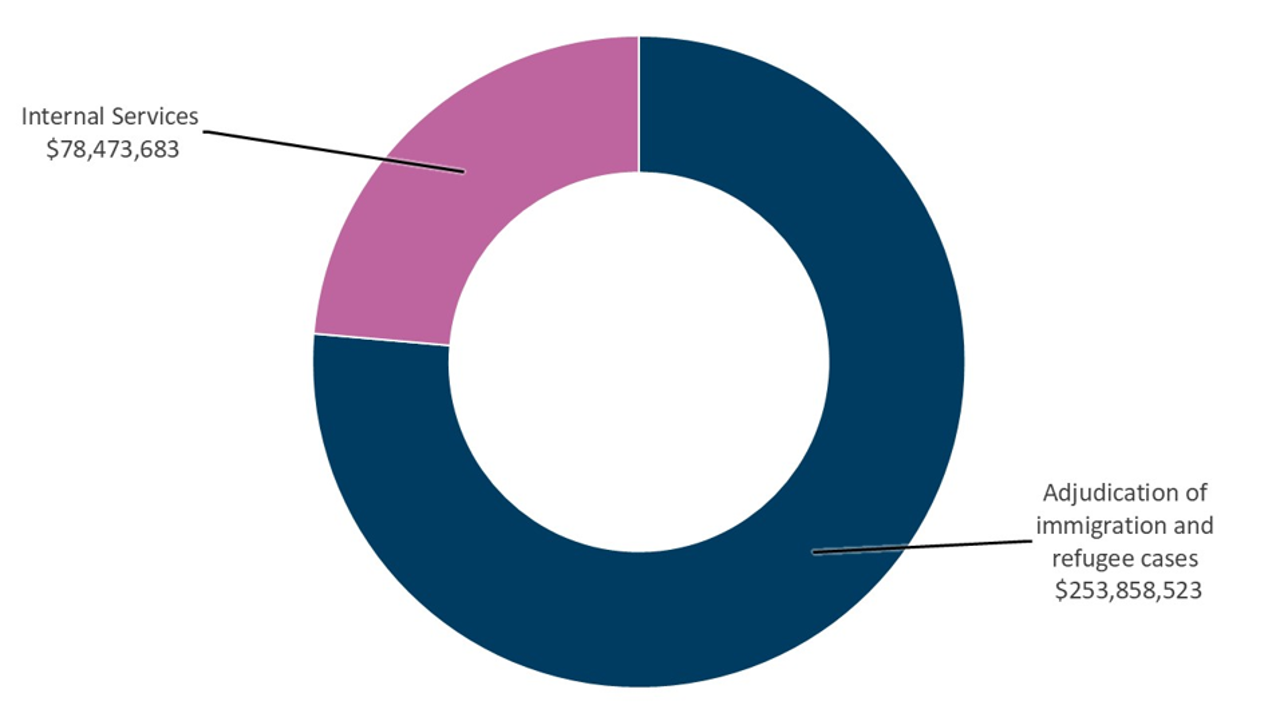
Figure 1 shows how much the IRB spent in 2025 to 2026 to carry out its core responsibilities and internal services.
Figure 1: Actual spending by core responsibility in 2025 to 2026
Text format - Figure 1: Actual spending by core responsibility in 2025 to 2026
| Core responsibility and internal services | 2025 to 2026 actual spending |
|---|
Adjudication of immigration and refugee cases | $253,858,523
|
Internal services | $78,473,683
|
Analysis of actual spending by core responsibility
The above pie chart shows that 76% of planned spending is allocated to the IRB’s core responsibility and 24% to supporting internal services.
Budgetary performance summary
Table 5 shows the money that the IRB spent in each of the past three years on its core responsibilities and on internal services.
Table 5: Actual three-year spending on the core responsibility and internal services (dollars)
| Core responsibility and internal services | 2025 to 2026 main estimates | 2025 to 2026 total authorities available for use | Actual spending over three years (authorities used) |
|---|
Adjudication of immigration and refugee cases | $270,950,367 | $280,662,414 | - 2023 to 2024: $253,103,632
- 2024 to 2025: $273,278,219
- 2025 to 2026: $253,858,523
|
Subtotal |
$270,950,367 |
$280,662,414 | -
2023 to 2024: $253,103,632
-
2024 to 2025: $273,278,219
-
2025 to 2026: $253,858,523
|
Internal services | $74,446,955 | $78,151,570 | - 2023 to 2024: $88,152,882
- 2024 to 2025: $79,596,812
- 2025 to 2026: $78,473,683
|
Total |
$345,397,322 |
$358,813,984 | -
2023 to 2024: $341,256,514
-
2024 to 2025: $352,875,031
-
2025 to 2026: $332,332,205
|
Analysis of the past three years of spending
The increase in actual spending from fiscal year 2023 to 2024 to fiscal year 2024 to 2025 reflects the Government's Budget 2022 announcement of a temporary top-up investment of $87 million over two years, which concluded in 2024 to 2025.
The decrease in actual spending in 2025 to 2026 was primarily driven by the temporary nature of the funding for asylum decision-making capacity. Anticipating the end of this funding at the end of the fiscal year and potential Comprehensive Expenditure Review (CER) impacts, the IRB reduced spending in 2025 to 2026, including implementing prudent workforce planning measures. The timing of renewal of the IRB’s temporary funding prevented the IRB from reversing the financial impacts and rehiring decision-makers.
The
Finances section of the Infographic for the IRB on GC InfoBase offers more financial information from previous years.
Planned spending for next three years
Table 6 shows the Board’s planned spending for each of the next three years on its core responsibilities and on internal services.
Table 6: Planned three-year spending on the core responsibility and internal services (dollars)
| Core responsibility and internal services | 2026 to 2027 planned spending | 2027 to 2028 planned spending | 2028 to 2029 planned spending |
|---|
Adjudication of immigration and refugee cases | $261,854,862 | $264,318,523 | $242,773,017 |
Subtotal |
$261,854,862 |
$264,318,523 |
$242,773,017 |
Internal services | $82,278,904 | $80,732,741 | $75,410,729 |
Total |
$344,133,766 |
$345,051,264 |
$318,183,746 |
Analysis of the next three years of planned spending
Planned spending remains stable at $344.1 million in fiscal year 2026 to 2027, supported by ongoing authorities and temporary funding that sustains enhanced operational capacity. Spending is expected to remain relatively consistent in fiscal year 2027 to 2028, at $345.1 million, before declining to $318.2 million in fiscal year 2028 to 2029 due to the end of the temporary funding from Budget 2025. The IRB will continue to pursue efficiency and productivity improvements to mitigate the impact of declining authorities and to maintain decision-making capacity in line with the targets outlined in its Departmental Results Framework.
The
Finances section of the Infographic for the IRB on GC InfoBase offers more detailed financial information related to future years.
Funding
This section provides an overview of the IRB’s voted and statutory funding for its core responsibilities and for internal services.
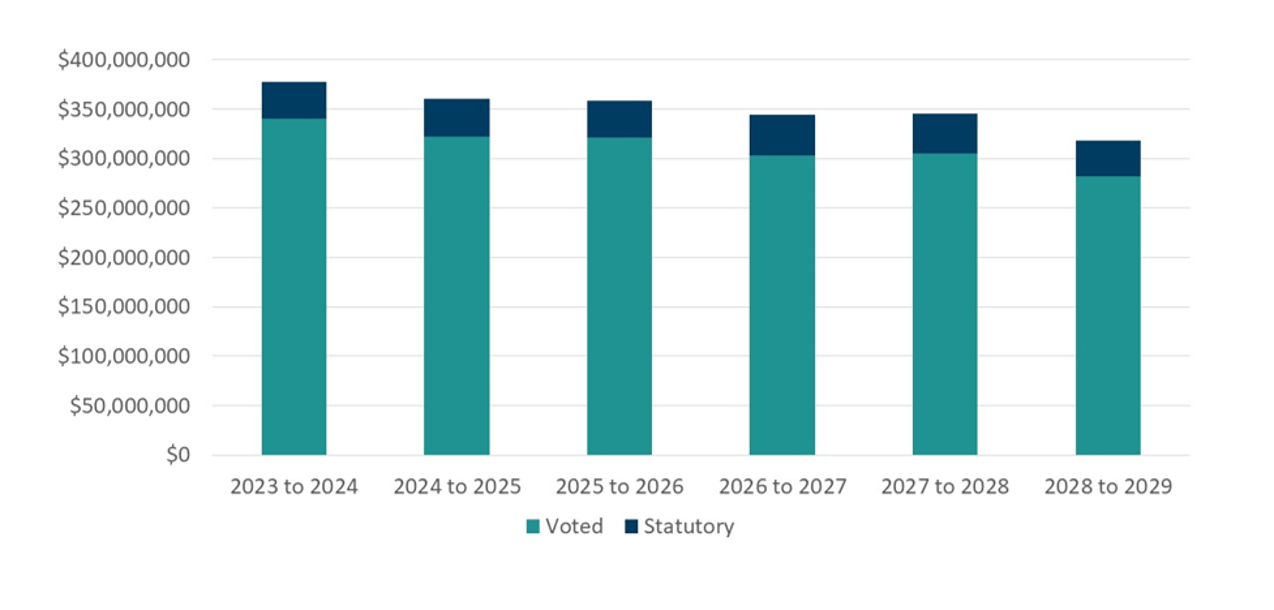
Figure 2 summarizes the department’s approved voted and statutory funding from fiscal year 2023 to 2024 to fiscal year 2028 to 2029.
Figure 2: Approved funding (statutory and voted) over a six-year period
Text format - Figure 2: Approved funding (statutory and voted) over a six-year period
| Fiscal year | Statutory | Voted | Total |
|---|
2023 to 2024
| $36,546,881 | $340,725,368 | $377,272,249 |
2024 to 2025 | $38,587,337 | $321,857,871 | $360,445,208 |
2025 to 2026 | $37,145,134 | $321,668,850 | $358,813,984 |
2026 to 2027 | $41,348,503 | $302,785,263 | $344,133,766 |
2027 to 2028 | $39,928,031 | $305,123,233 | $345,051,264 |
2028 to 2029 | $36,170,381 | $282,013,365 | $318,183,746 |
Analysis of statutory and voted funding over a six-year period
The graph above illustrates the IRB’s approved funding over a six-year period. Voted appropriations decrease gradually from fiscal year 2023 to 2024 to fiscal year 2026 to 2027, as temporary resources from Budget 2022 and Budget 2024 end. Funding stabilizes in fiscal years 2026 to 2027 and 2027 to 2028, following the approval of two-year temporary funding in Budget 2025, and is expected to decline in fiscal year 2028 to 2029 as those measures end. Statutory authorities remain relatively stable throughout the period, ranging from $36.2 million to $41.3 million.
Consult the
Public Accounts of Canada for further information on the IRB's departmental voted and statutory expenditures.
Financial statement highlights
This section presents the IRB’s
Financial statements (unaudited) for the year ended March 31, 2026.
Table 7 summarizes the expenses and revenues for 2025 to 2026, which net to the cost of operations before government funding and transfers.
Table 7: Condensed Statement of Operations (unaudited) for the year ended March 31, 2026 (dollars)
| Financial information | 2025 to 2026 actual results | 2025 to 2026 planned results | Difference (actual results minus planned) |
|---|
Total expenses | $379,585,959 | $400,228,921 | $-20,642,962 |
Total revenues | $- | $- | $- |
Net cost of operations before government funding and transfers | $379,585,959 | $400,228,921 | $-20,642,962 |
Analysis of expenses and revenues for 2025 to 2026
Table 7 shows that planned results exceeded actual results by $20.6M for fiscal year 2025 to 2026. This reflects the IRB’s spending prudence exercised throughout the year in response to anticipated reductions.
The 2025 to 2026 planned results information is provided in the Board's
Future-Oriented Statement of Operations and Notes 2025–26.
Table 8 summarizes actual expenses and revenues and shows the net cost of operations before government funding and transfers.
Table 8: Condensed Statement of Operations (unaudited) for fiscal years 2024 to 2025 and 2025 to 2026 (dollars)
| Financial information | 2025 to 2026 actual results | 2024 to 2025 actual results | Difference (2025 to 2026 minus 2024 to 2025) |
|---|
Total expenses | $379,585,959 | $401,384,665 | $-21,798,706 |
Total revenues | $- | $- | $- |
Net cost of operations before government funding and transfers | $379,585,959 | $401,384,665 | $-21,798,706 |
Analysis of differences in expenses and revenues between fiscal years 2024 to 2025 and 2025 to 2026
Table 8 above compares the IRB’s year-over-year net cost of operations. Costs of operations decreased by $21.8M, or 5%, in 2025 to 2026 when compared with 2024 to 2025. This decrease reflects the IRB’s intention to minimize potential impacts stemming from the end of temporary funding and CER, including a reduction in asylum decision-making capacity.
Table 9 provides a brief snapshot of the amounts the IRB owes or must spend (liabilities) and its available resources (assets), which helps to indicate its ability to carry out programs and services.
Table 9: Condensed Statement of Financial Position (unaudited) as of March 31, 2026 (dollars)
| Financial information | Actual fiscal year (2025 to 2026) | Previous fiscal year (2024 to 2025) | Difference (2025 to 2026 minus 2024 to 2025)
|
|---|
Total net liabilities | $43,837,815 | $50,829,940 | $-6,992,124 |
Total net financial assets | $25,464,745 | $31,552,852 | $-6,088,017 |
Departmental net debt | $18,373,070 | $19,277,088 | $-904,017 |
Total non-financial assets | $22,195,556 | $27,057,958 | $-4,862,403 |
Departmental net financial position | $3,822,485 | $7,780,871 | $-3,958,385 |
Analysis of the IRB's liabilities and assets since last fiscal year
Table 9 presents the IRB’s financial position as at March 31, 2026 (2025 to 2026 actual results) compared with March 31, 2025 (2024 to 2025 actual results).
Departmental net debt decreased by $0.9M compared with the previous fiscal year, as the reduction in total net liabilities ($7M) was larger than the reduction in total net financial assets ($6.1M). This decrease reflects lower salary-related liabilities at year-end, following the timely payment of outstanding accounts payable and salary-related benefits, such as vacation pay and compensatory leave.
This, combined with a $4.9M decrease in non-financial assets (e.g., tangible capital assets), resulting from the removal of assets that had reached the end of their usable life and the write-off of obsolete assets, contributed to an overall $3.9M decrease in the Board’s net financial position compared with the previous fiscal year.
Human resources
This section presents an overview of the Board’s actual and planned human resources from fiscal year 2023 to 2024 to fiscal year 2028 to 2029.
Table 10 shows a summary in full-time equivalents of human resources for the Board’s core responsibilities and for its internal services for the previous three fiscal years.
Table 10: Actual human resources for the core responsibility and internal services for the last three years
| Core responsibility and internal services | 2023 to 2024 actual full-time equivalents | 2024 to 2025 actual full-time equivalents | 2025 to 2026 actual full-time equivalents |
|---|
Adjudication of immigration and refugee cases | 1,918 | 2,051 | 1,949 |
Subtotal |
1,918 |
2,051 |
1,949 |
Internal services | 477 | 522 | 492 |
Total |
2,395 |
2,573 |
2,441 |
Analysis of human resources for the last three years
The increase in the IRB's actual full-time equivalents (FTEs) from fiscal years 2023 to 2024 and 2024 to 2025 is primarily attributed to the additional staffing required to manage a higher volume of refugee protection claims. This growth reflects the final year of temporary funding provided through Budget 2022, which supported the Board's efforts to address the anticipated rise in claims over the two-year period.
The decrease in FTEs in 2025 to 2026 was primarily driven by the temporary nature of funding for asylum decision-making capacity. Anticipating the sunsetting of this funding at the end of the fiscal year and potential CER impacts, the IRB reduced its spending in 2025 to 2026. The timing of the renewal of the Board's temporary funding prevented the IRB from reversing the financial impacts and rehiring decision-makers.
Table 11 shows the planned full-time equivalents for the IRB's core responsibility and for its internal services for the next three years. Human resources for the current fiscal year are forecast based on year to date.
Table 11: Human resources planning summary for the core responsibility and internal services for the next three years
| Core responsibility and internal services | 2026 to 2027 planned full-time equivalents | 2027 to 2028 planned full-time equivalents | 2028 to 2029 planned full-time equivalents |
|---|
Adjudication of immigration and refugee cases | 1,983 | 2,002 | 1,827 |
Subtotal |
1,983 |
2,002 |
1,827 |
Internal services | 492 | 483 | 459 |
Total |
2,475 |
2,485 |
2,286 |
Analysis of human resources for the next three years
Table 11 presents the Board’s planned human resources, expressed in FTEs, for its core responsibility and internal services over the next three fiscal years. Planned FTEs remain concentrated in the core responsibility, reflecting the staffing required to support adjudication activities. Internal services show a gradual decline over the planning period, consistent with efforts to streamline administrative functions. These figures incorporate the temporary two-year funding extension announced in Budget 2025, providing sustained capacity through fiscal year 2027 to 2028 before declining in fiscal year 2028 to 2029 as temporary funding ends.
Supplementary information tables
The following supplementary information tables are available on the IRB's website:
Federal tax expenditures
The tax system can be used to achieve public policy objectives through the application of special measures such as low tax rates, exemptions, deductions, deferrals and credits. The Department of Finance Canada publishes cost estimates and projections for these measures each year in the
Report on Federal Tax Expenditures. This report also provides detailed background information on tax expenditures, including descriptions, objectives, historical information and references to related federal spending programs as well as evaluations and GBA Plus of tax expenditures.
Corporate information
Departmental profile
Appropriate minister(s): The Honourable Lena Metlege Diab, ECNS, KC, PC, MP
Institutional head: Manon Brassard, Chairperson and Chief Executive Officer
Ministerial portfolio: Immigration, Refugees and Citizenship
Enabling instrument(s):
Immigration and Refugee Protection Act
Year of incorporation / commencement: 1989
Departmental contact information
Mailing address:
- Immigration and Refugee Board of Canada
- Minto Place, Canada Building
- 344 Slater Street, 12th floor
- Ottawa, Ontario, K1A 0K1
- Canada
For more contact information, visit
Contact Us .
Follow us on
X (Twitter),
Facebook, or
LinkedIn.
Definitions
-
appropriation (crédit)
- Any authority of Parliament to pay money out of the Consolidated Revenue Fund.
-
budgetary
expenditures (dépenses budgétaires)
- Operating and capital expenditures; transfer payments to other levels of government, departments or individuals; and payments to Crown corporations.
-
core responsibility (responsabilité essentielle)
- An enduring function or role of a department. The departmental results listed for a core responsibility reflect the outcomes that the department seeks to influence or achieve.
-
Departmental Plan (plan ministériel)
- A report that outlines the anticipated activities and expected performance of an appropriated department over a 3-year period. Departmental Plans are usually tabled in Parliament in spring.
-
departmental priority (priorité)
- A plan, project or activity that a department focuses and reports on during a specific planning period. Priorities represent the most important things to be done or those to be addressed first to help achieve the desired departmental results.
-
departmental result (résultat ministériel)
- A high-level outcome related to the core responsibilities of a department.
-
departmental result indicator (indicateur de résultat ministériel)
- A quantitative or qualitative measure that assesses progress toward a departmental result.
-
departmental results framework (cadre ministériel des résultats)
- A framework that connects the department's core responsibilities to its departmental results and departmental result indicators.
-
Departmental Results Report (rapport sur les résultats ministériels)
- A report outlining a department's accomplishments against the plans, priorities and expected results set out in the corresponding Departmental Plan.
-
Full-time
equivalent (équivalent temps plein)
- Measures the person years in a departmental budget. An employee's scheduled hours per week divided by the employer's hours for a full-time workweek calculates a full-time equivalent. For example, an employee who works 20 hours in a 40-hour standard workweek represents a 0.5 full-time equivalent.
-
Gender-based Analysis Plus (GBA Plus) (analyse comparative entre les sexes plus [ACS Plus])
- An analytical tool that helps to understand the ways diverse individuals experience policies, programs and other initiatives. Applying GBA Plus to policies, programs and other initiatives helps to identify the different needs of the people affected, the ways to be more responsive and inclusive, and the methods to anticipate and mitigate potential barriers to accessing or benefitting from the initiative. GBA Plus goes beyond biological (sex) and socio-cultural (gender) differences to consider other factors, such as age, disability, education, ethnicity, economic status, geography (including rurality), language, race, religion, and sexual orientation.
-
government priorities (priorités pangouvernementales)
- For the purpose of the 2025–26 Departmental Results Report, government priorities are the high-level themes outlining the government’s agenda as announced in the
2025 Speech from the Throne.
-
horizontal initiative (initiative horizontale)
- A program, project or other initiative where two or more federal departments receive funding to work collaboratively on a shared outcome usually linked to a government priority, and where the ministers involved agree to designate it as horizontal. Specific reporting requirements apply, including that the lead department must report on combined expenditures and results.
-
Indigenous business (entreprise autochtones)
- Requirements for verifying Indigenous businesses for the purposes of the Departmental Results Report are available through the Indigenous Services Canada
Mandatory minimum 5% Indigenous procurement target website.
-
non‑budgetary expenditures (dépenses non budgétaires)
- Net outlays and receipts related to loans, investments and advances, which change the composition of the financial assets of the Government of Canada.
-
performance (rendement)
- What a department did with its resources to achieve its results, how well those results compare to what the department intended to achieve, and how well lessons learned have been identified.
-
performance indicator (indicateur de rendement)
- A qualitative or quantitative measure that assesses progress toward a departmental-level or program-level result, or the expected outputs or outcomes of a program, policy or initiative.
-
plan (plan)
- The articulation of strategic choices, which provides information on how a department intends to achieve its priorities and associated results. Generally, a plan will explain the logic behind the strategies chosen and tend to focus on actions that lead to the expected result.
-
planned spending (dépenses prévues)
- For Departmental Plans and Departmental Results Reports, planned spending refers to the amounts presented in Main Estimates. Departments must determine their planned spending and be able to defend the financial numbers presented in their Departmental Plans and Departmental Results Reports.
-
program (programme)
- An Individual, group, or combination of services and activities managed together within a department and focused on a specific set of outputs, outcomes or service levels.
-
program inventory (répertoire des programmes)
- A listing that identifies all the department's programs and the resources that contribute to delivering on the department's core responsibilities and achieving its results.
-
result (résultat)
- An outcome or output related to the activities of a department, policy, program or initiative.
-
statutory expenditures (dépenses législatives)
- Spending approved through legislation passed in Parliament, other than appropriation acts. The legislation sets out the purpose and the terms and conditions of the expenditures.
-
target (cible)
- A quantitative or qualitative, measurable goal that a department, program or initiative plans to achieve within a specified time period.
-
voted expenditures (dépenses votées)
- Spending approved annually through an appropriation act passed in Parliament. The vote also outlines the conditions that govern the spending.